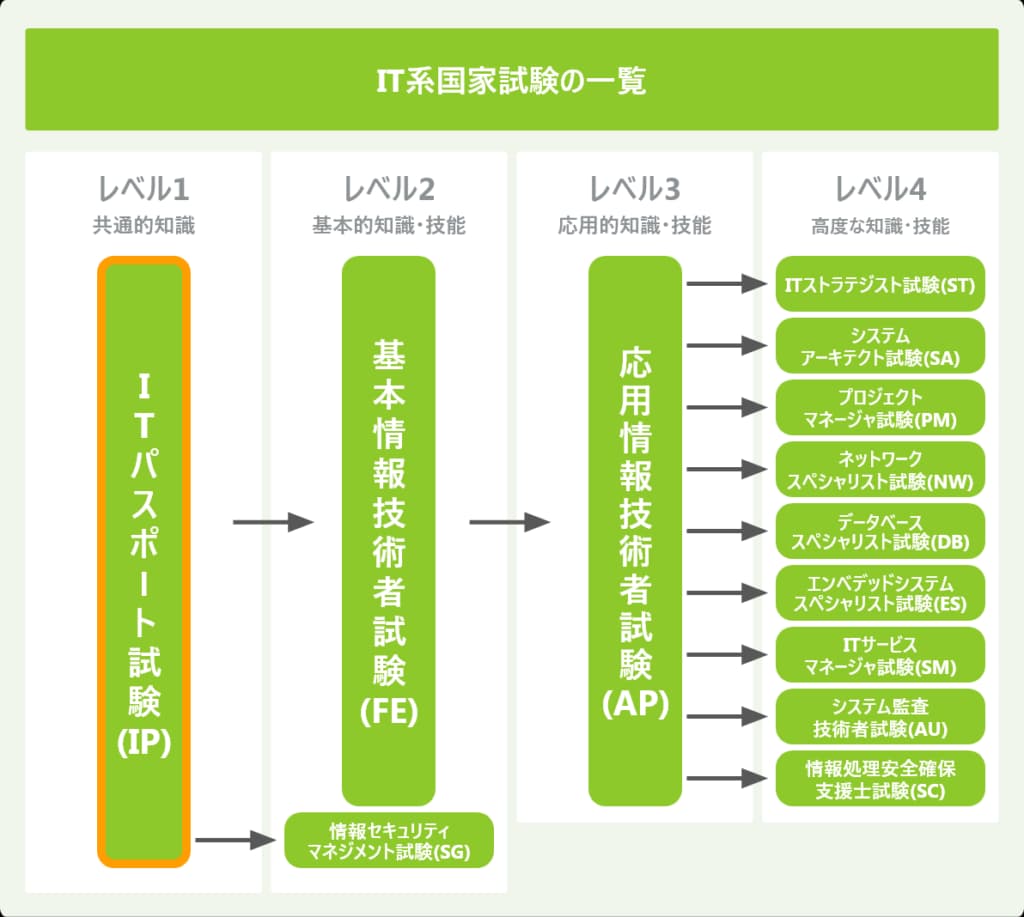

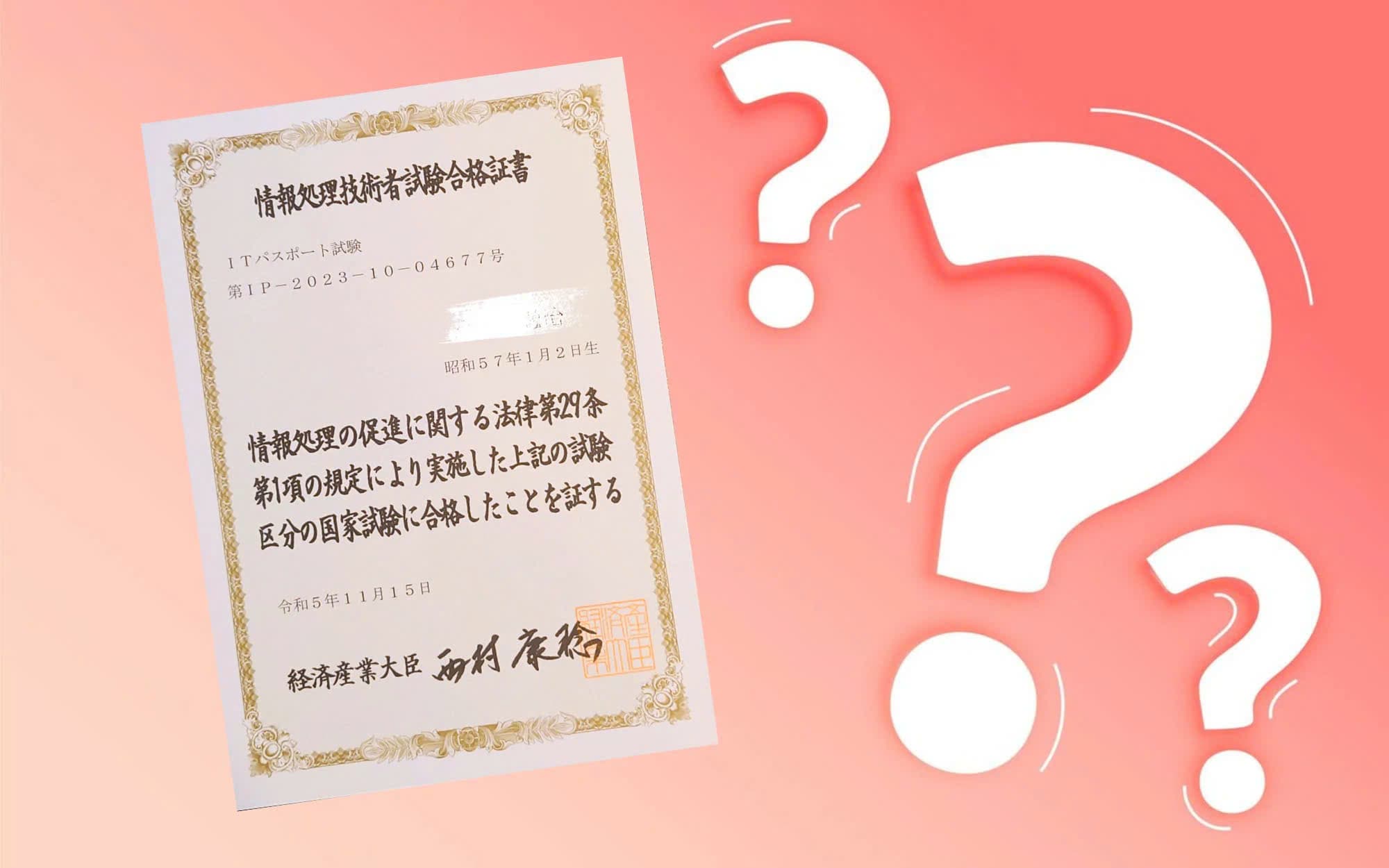
Hello fellow IT engineers. If you are working or planning to develop your career at Japanese enterprises, you have probably heard of the ITSS (Information Technology Skill Standards). Among these, the Applied Information Technology Engineer Examination (応用情報技術者試験, briefly called AP) is considered the most prestigious "guarantee" of an engineer's competence.
AP is not just a test to check how well you code. It is a comprehensive assessment to see if you have the mindset of a Leader, System Architect, or Project Manager. The passing rate for AP is quite strict, usually hovering around 20% - 25%. However, with the right strategy, conquering it is entirely within reach.
1Why AP and not another certificate?
Possessing an AP certificate brings extremely clear privileges, directly impacting your income and life in Japan:
- Permanent Resident Visa Points: Directly adds 20 points to your Highly Skilled Professional (HSP) visa application. This is a huge boost that shortens the time to get PR to just 1 to 3 years.
- Monthly Allowance (Shikaku Teate): Many Japanese companies have a policy to add 10,000 to 30,000 JPY/month to your base salary if you hold an AP degree.
- Career Advancement: Marks the transition from a Programmer (Coder) to higher-level positions like System Engineer (SE).
2The Rules: A "brain-burning" day with 2 exams
The AP exam is organized by IPA twice a year (April and October). You will take 2 consecutive tests on the same day. The core point is: You must score a minimum of 60/100 for BOTH exams. If you fail the morning exam, your afternoon exam won't be graded.
Battle 1: Morning Exam (午前 - Gozen) - The Sprint
- Time: 150 minutes for 80 multiple-choice questions. You have less than 2 minutes per question.
- Knowledge Structure:
- Technology (~50 qs): Mathematics, algorithms, computer architecture, OS, Network, Database, Security.
- Management (~10 qs): Project Management (PMBOK), risk management, ITIL.
- Strategy (~20 qs): Business strategy, enterprise architecture, accounting, law (copyright, labor).
Don't try to memorize textbooks. The key here is grinding Past Papers because IPA often reuses about 40-50% of old questions. Use the website 応用情報技術者試験過去問道場 (AP Siken Kakomon Dojo). Grind the last 5-7 years of exams until your accuracy is always over 80%, and you are guaranteed to pass.
Battle 2: Afternoon Exam (午後 - Gogo) - Choosing your strengths
- Short essay and Case Study analysis (5-10 pages long) in 150 minutes.
- There are 11 topics. You are required to do Question 1: Information Security. Then, choose to answer 4 more questions from the remaining 10 topics (Business Strategy, Programming, System Architecture, Network, Database, Embedded Systems, IS Development, Project Management, Service Management, Audit).
For those working in Web Development (e.g., MERN stack or Full-stack), maximize your technical background. Don't "look at the other mountain", finalize your strong subjects before the exam day. The advice is to aim straight for Database and System Architecture.
3"Beating" Database and System Architecture
These are two "gold mines" for points if you have Web experience.
Database (データベース): When data mindset rules
AP requires a strict systems mindset following Relational Database Standards (RDBMS).
- ERD Reading Trick: Don't jump into reading the text right away. Glance over the Entity-Relationship Diagram (ERD) first. When reading the text, underline phrases indicating quantities and relationships (e.g., "An order can have multiple products" -> 1-N relationship).
- Diagnosing Normalization (正規化 - Seikika): The exam loves asking about 1NF, 2NF, and 3NF. Remember the rule: "Is this table fully functionally dependent on the Primary Key (主キー)? Is there any transitive dependency?". If there is redundant data, split the table and assign a Foreign Key (外部キー).
- "Catching SQL Keywords" in Japanese:
- Descending sort: 降順 (Koujun) =
ORDER BY ... DESC - Group: グループ化 (Gurupuka) =
GROUP BY - Remove duplicates: 重複を排除 (Choufuku wo haijo) =
DISTINCT
- Descending sort: 降順 (Koujun) =
System Architecture (システムアーキテクチャ): The optimization problem
This subject tests if you know how to calculate server load capacity, network bandwidth, or design redundant systems.
- Drawing Data Flow: Case Studies are often very long. Sketch out the Components:
Client -> Load Balancer -> Web Server -> DB Server. Wherever the problem mentions a bottleneck, mark an "X" right there. - "Must-know" formulas: You must memorize how to calculate Availability (稼働率).
- Series system:
A × B - Parallel system:
1 - (1-A) × (1-B)
- Series system:
- Lifesaving vocabulary:
- Bottleneck: ボトルネック (Bottleneck) - Identify if it's CPU, RAM, or I/O.
- High Availability: 高可用性.
- System Expansion: スケールアップ (Scale up - upgrading one machine) vs スケールアウト (Scale out - adding more machines).
4The nightmare called "Specialized Japanese"
AP's IT knowledge isn't too hard for engineers, but the language barrier is. Having passed JLPT N3 and working towards N2 is a very solid foundation. However, reading and analyzing systems is completely different from daily reading comprehension.
Speed is survival
You only have 30 minutes for each Case Study. Don't read and translate every word. Use the Scanning technique, find structures like: 「~という課題がある」(There is a problem...) or 「~を満たす必要がある」(Must satisfy...). This is the key to picking out constraints for the design.
Writing essays
You must write short sentences (15-40 characters) in Japanese to explain the solution. Practice writing concisely, using the correct short form structure (Plain form / である).
5Proposed Study Roadmap (4-Month Campaign)
- Month 1: General theory review. Read the "All in One" (オールインワン) book to familiarize yourself with specialized Kanji.
- Month 2: Grind morning questions on Kakomon Dojo. Set a goal of 50-100 questions per day. Take notes of your mistakes.
- Month 3: Practice afternoon exams. Choose 4 fixed subjects, set a timer for 30 minutes/exam. Practice underlining keywords and writing answers.
- Month 4 (Sprint Phase): Take Full Tests 2-3 times (both morning and afternoon) on weekends to get used to the pressure of sitting in the exam room for 5 hours straight.
Conclusion
The AP exam is truly a "tough" challenge, requiring you to balance technical system knowledge, management mindset, and Japanese processing ability. However, the value it brings to your career path, income, and settlement in Japan is absolutely worth every hour you spend grinding.
Wish you a resilient spirit and soon hold this powerful certificate in your hands!